Ate
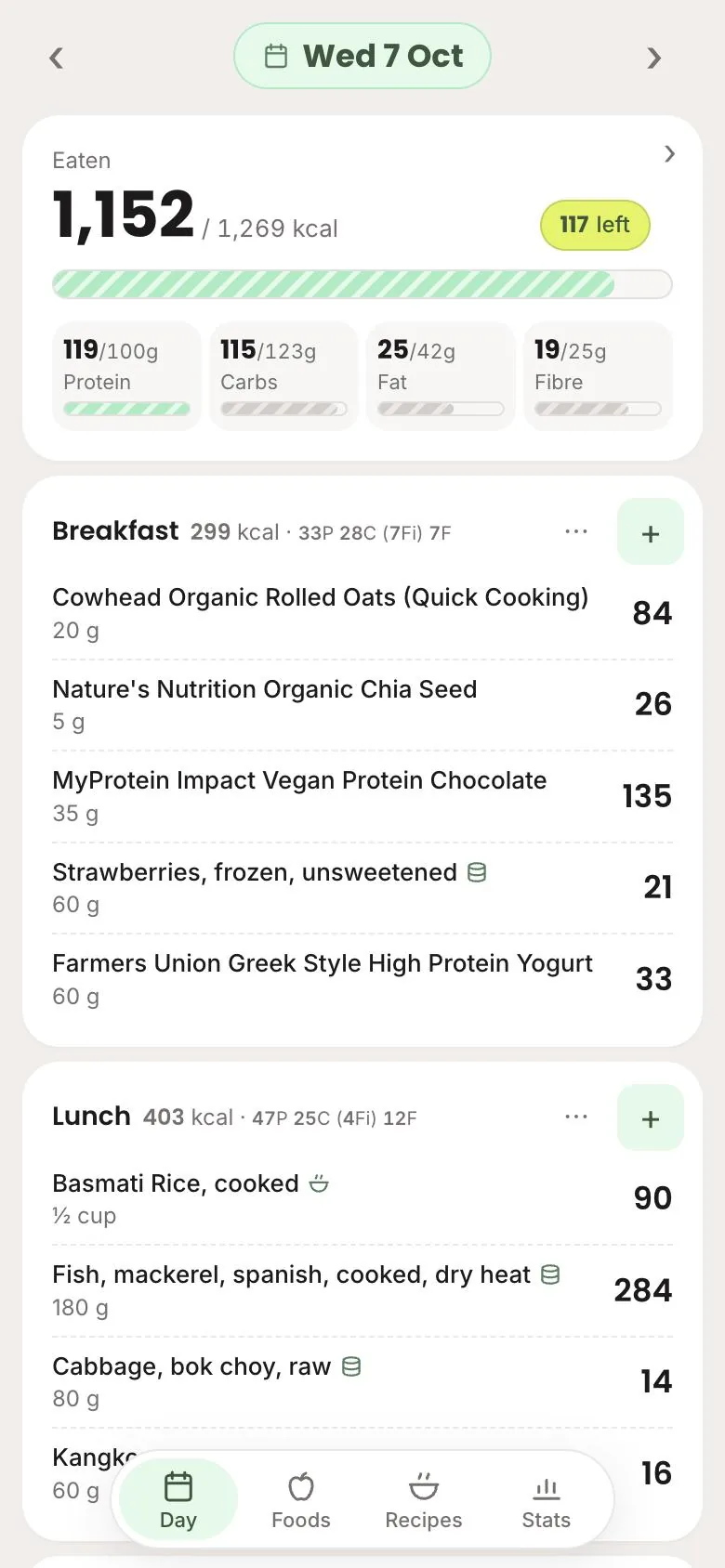
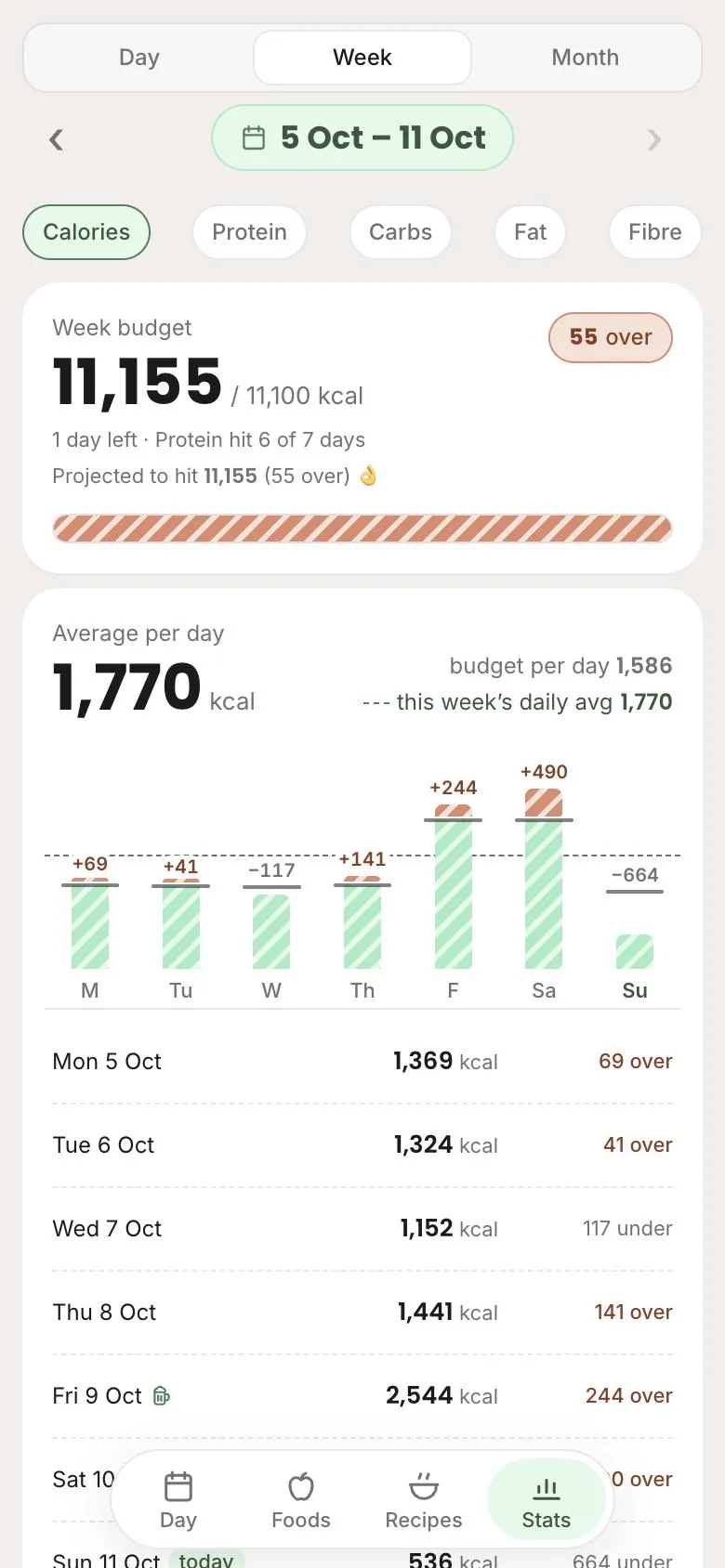
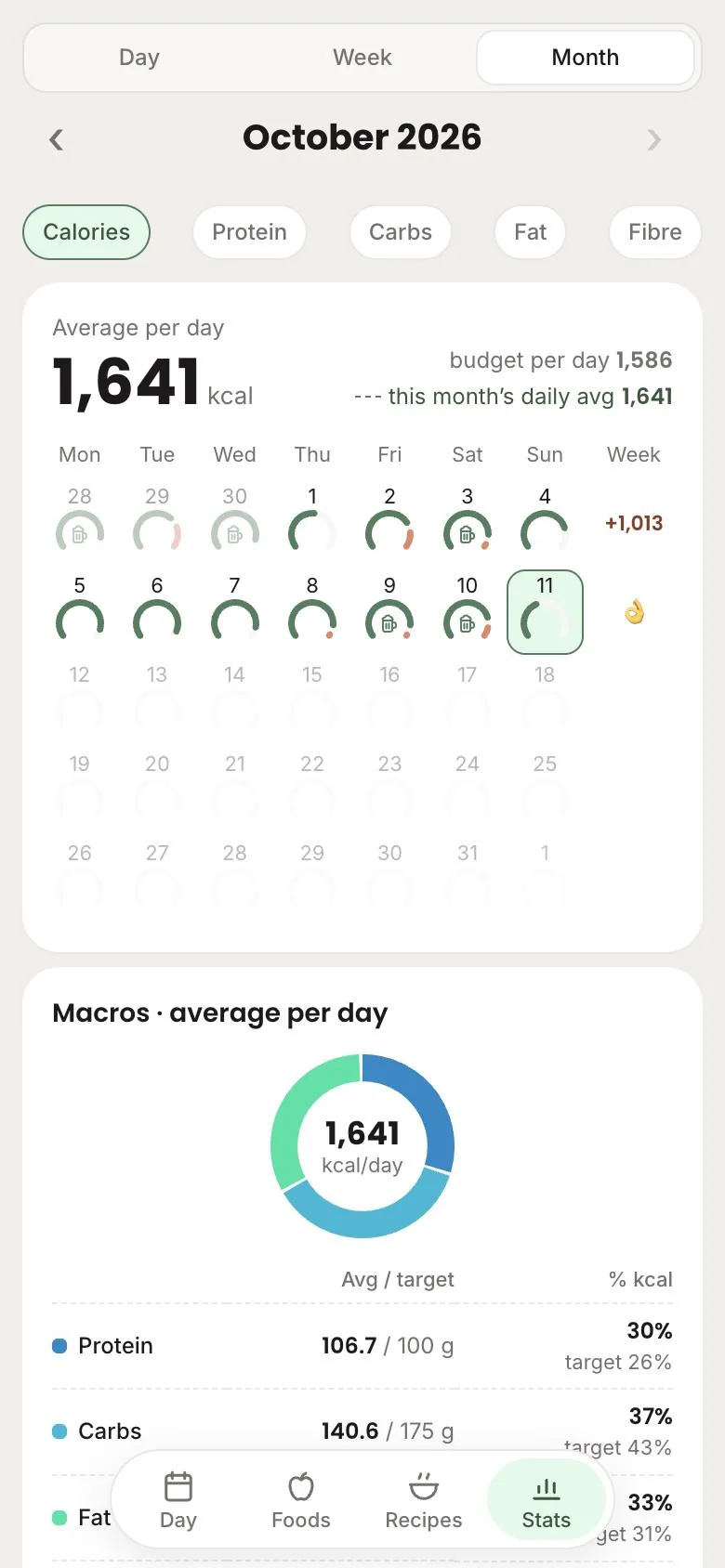
A calorie tracker built around the week, not the day. It budgets in room for social days, projects where the week will land as you log, and eases the days left if you run over, with protein held fixed. Nutrition comes from verified databases: USDA FoodData Central and Singapore's Health Promotion Board, hawker dishes included.

Billette
A quoting and invoicing tool for freelance work, replacing a spreadsheet that broke one too many times. Build a quote, convert it to an invoice, print to PDF. Everything lives in localStorage: no backend, no build step.
Cart
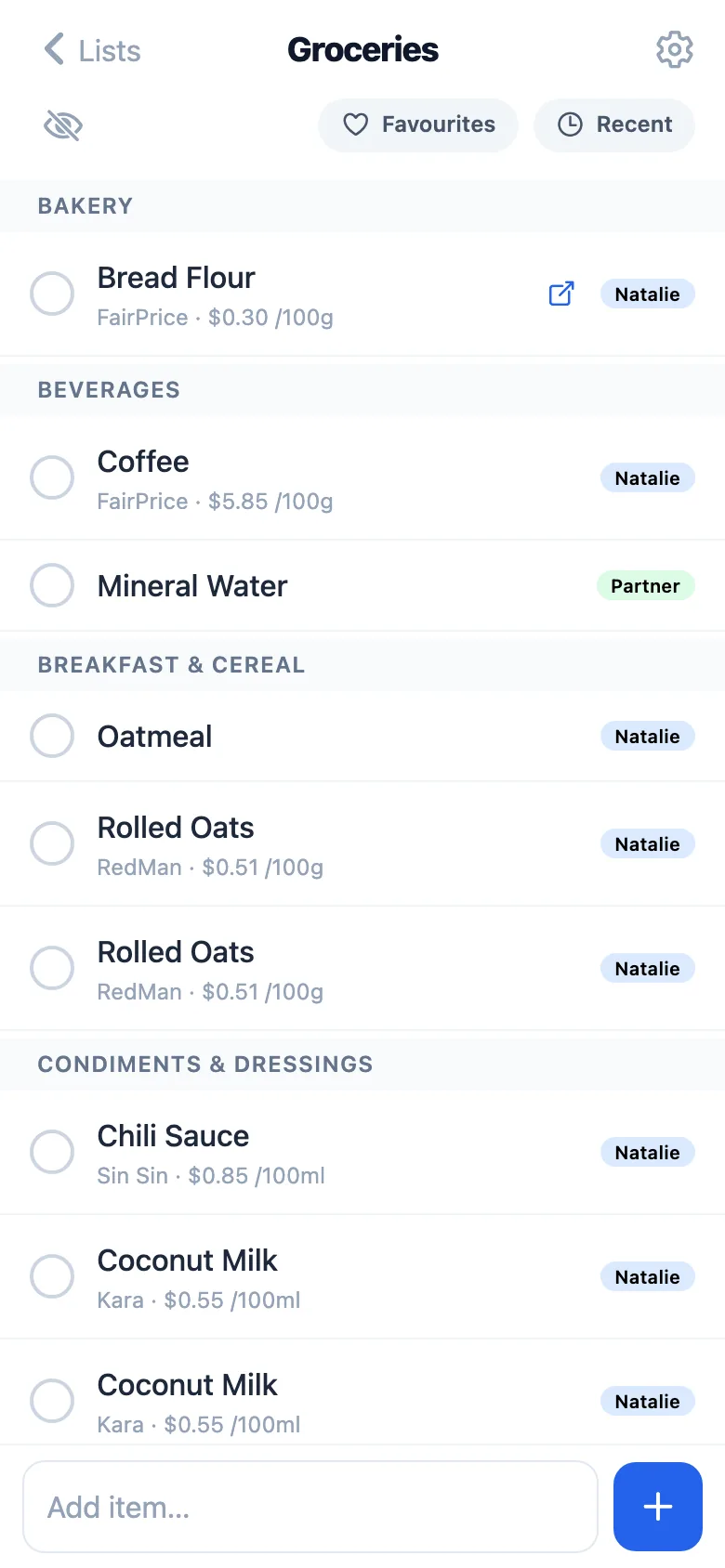
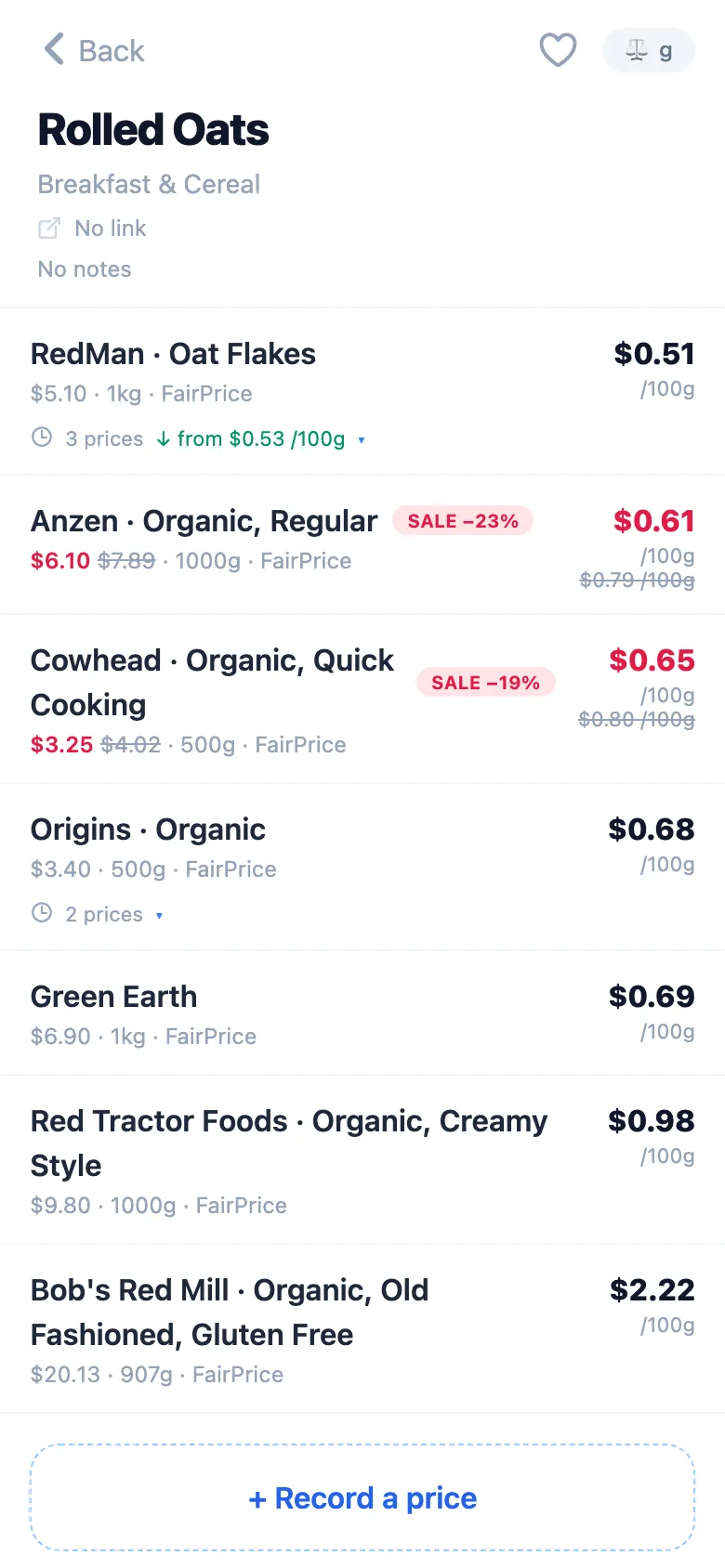
A collaborative grocery app for two. Shared lists plus a price book that normalises everything to $/100g — so sale prices and different pack sizes are comparable at a glance. Built with Expo so it runs natively on both our phones.
Cookbook
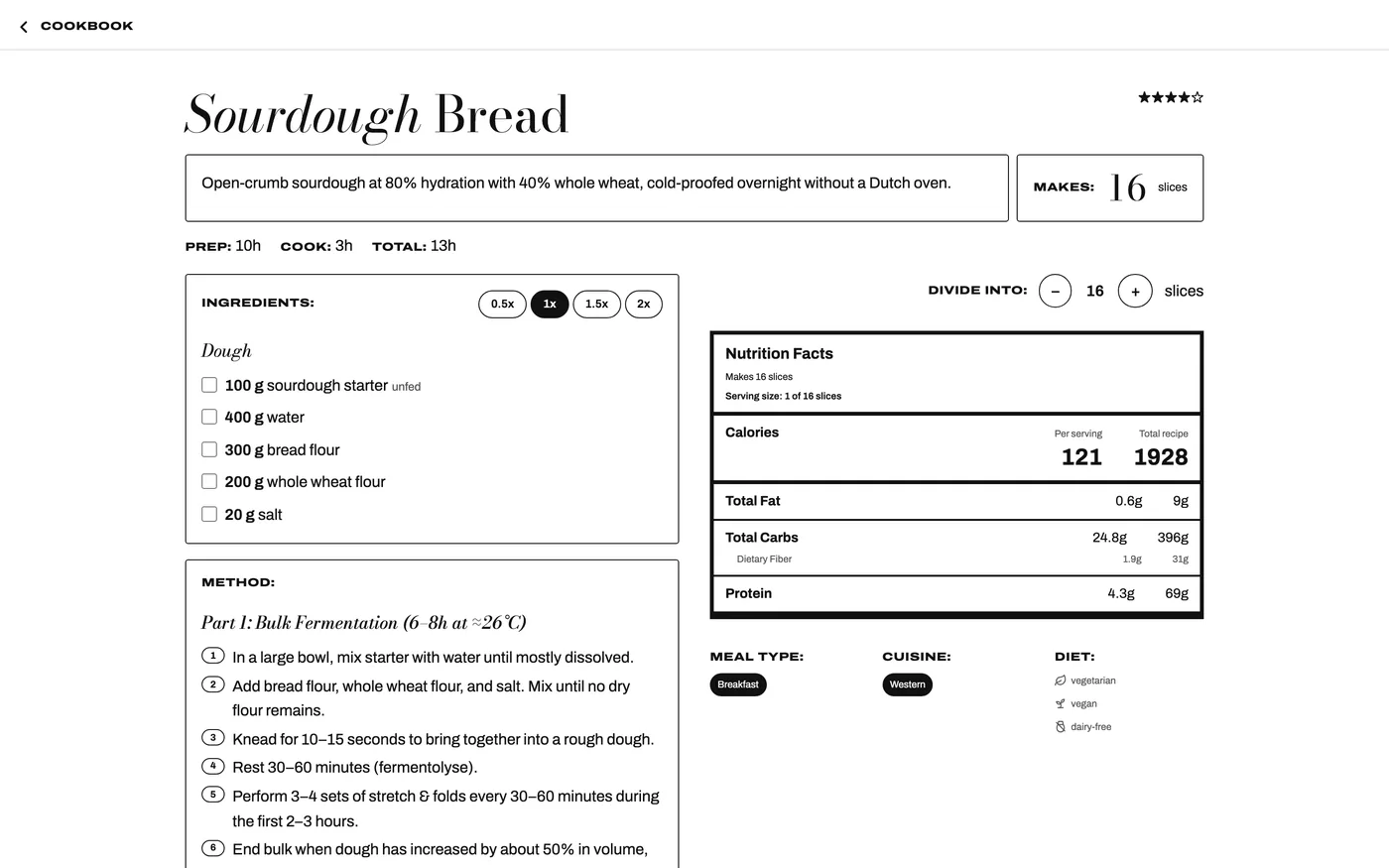
A recipe site with ingredient scaling, nutrition tracking, and a cooking mode that keeps the screen on. Recipe apps have too many ads and none of them scale fractions correctly. Recipes are markdown files; Keystatic is the editor.
GymCat
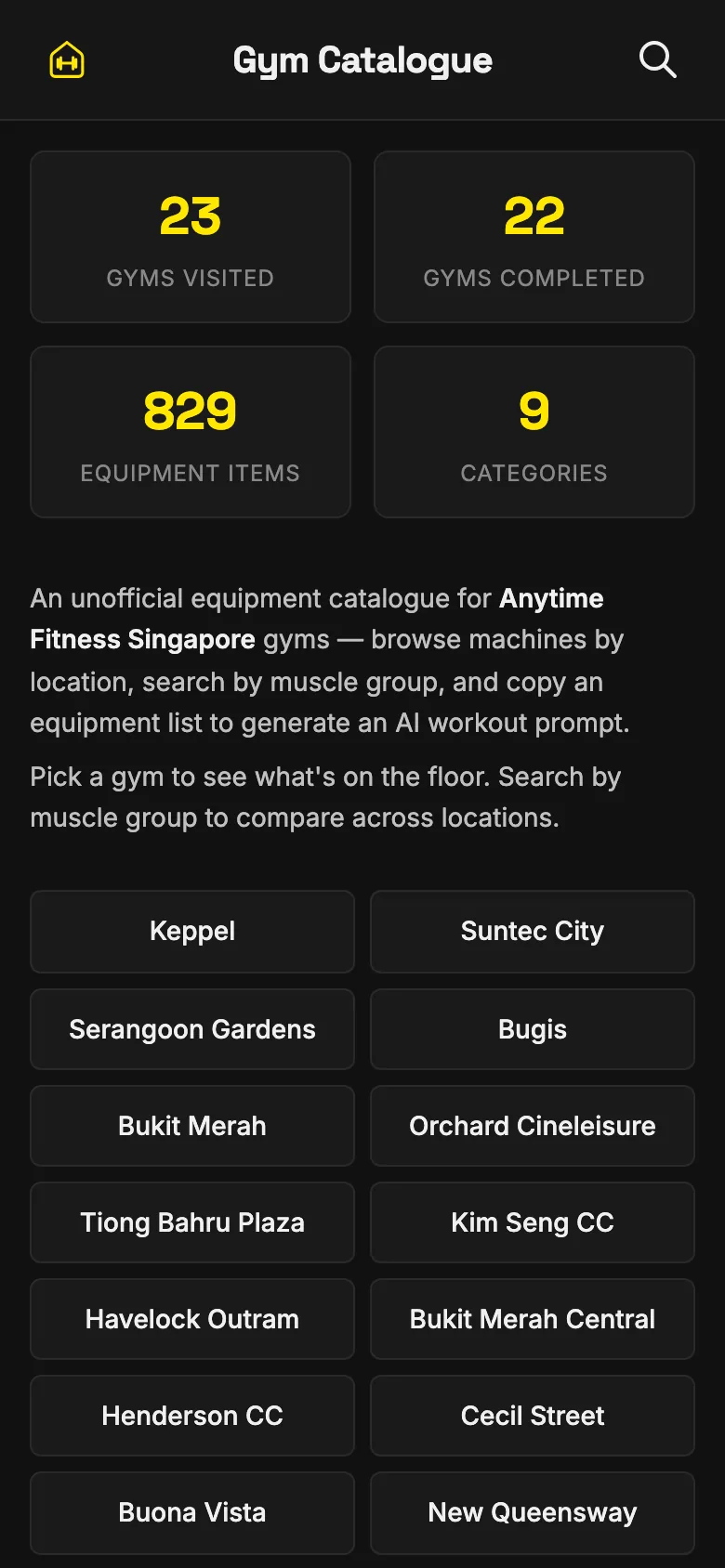
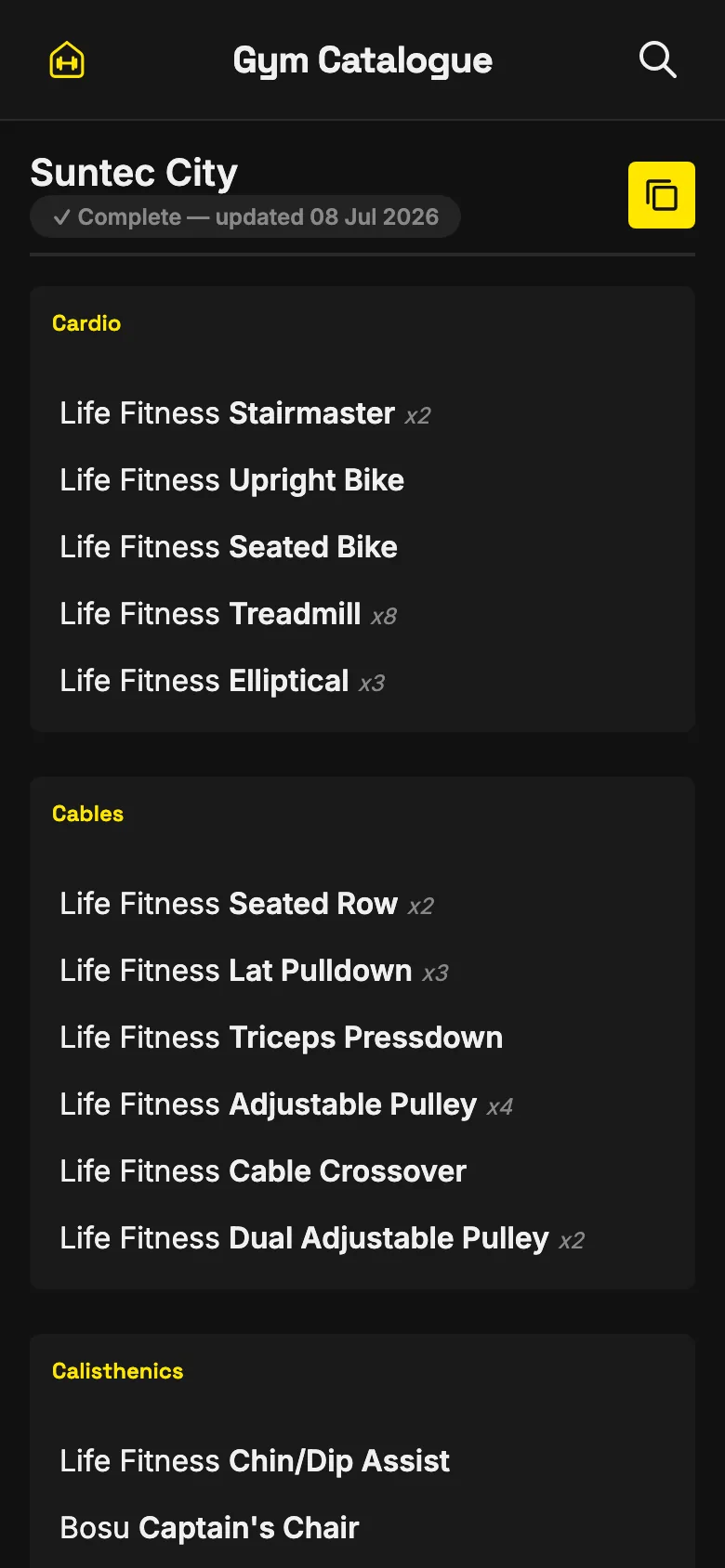
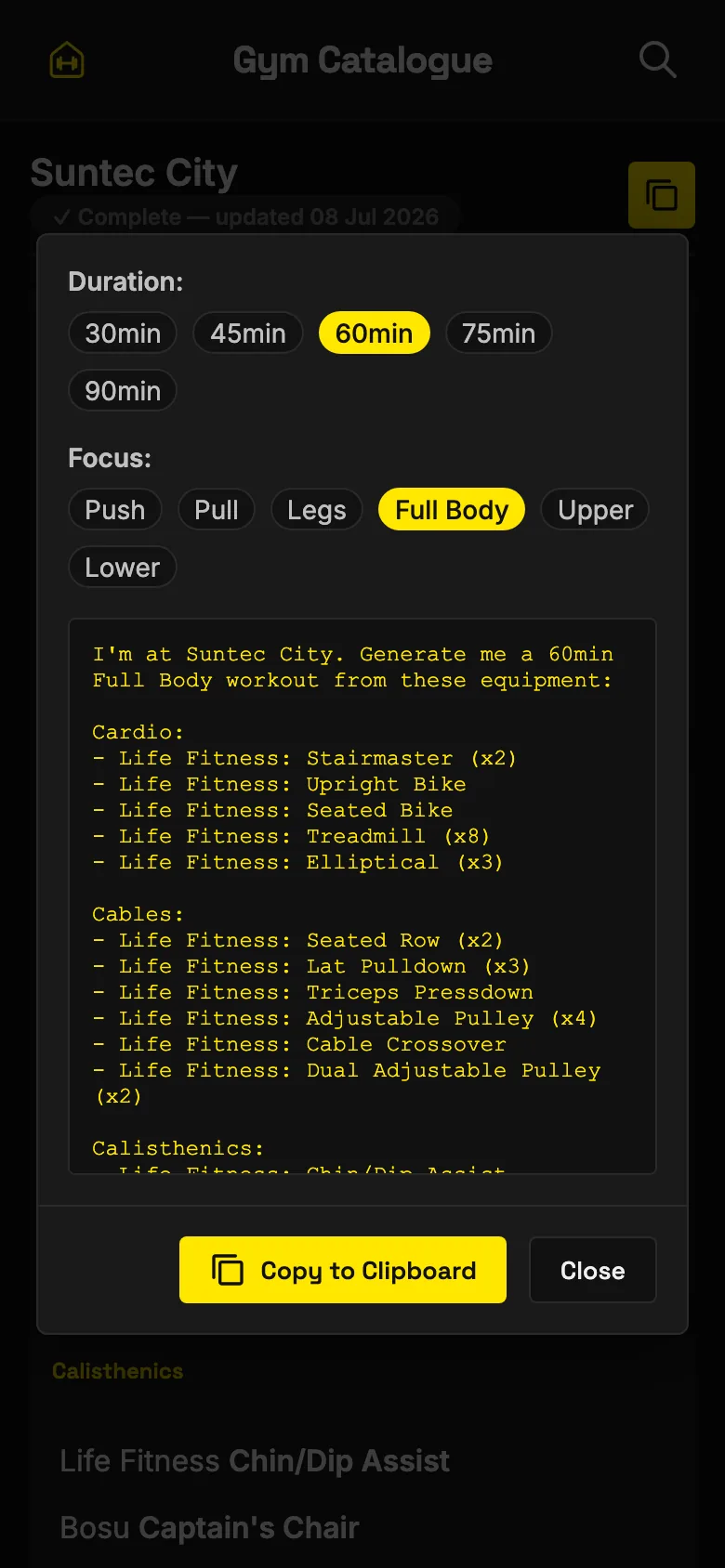
A reference catalogue of equipment across Anytime Fitness gym locations in Singapore. Built from personal frustration with arriving at a gym that didn't have the rack I needed. Equipment is hand-curated as JSON and grouped by function.
Ledger
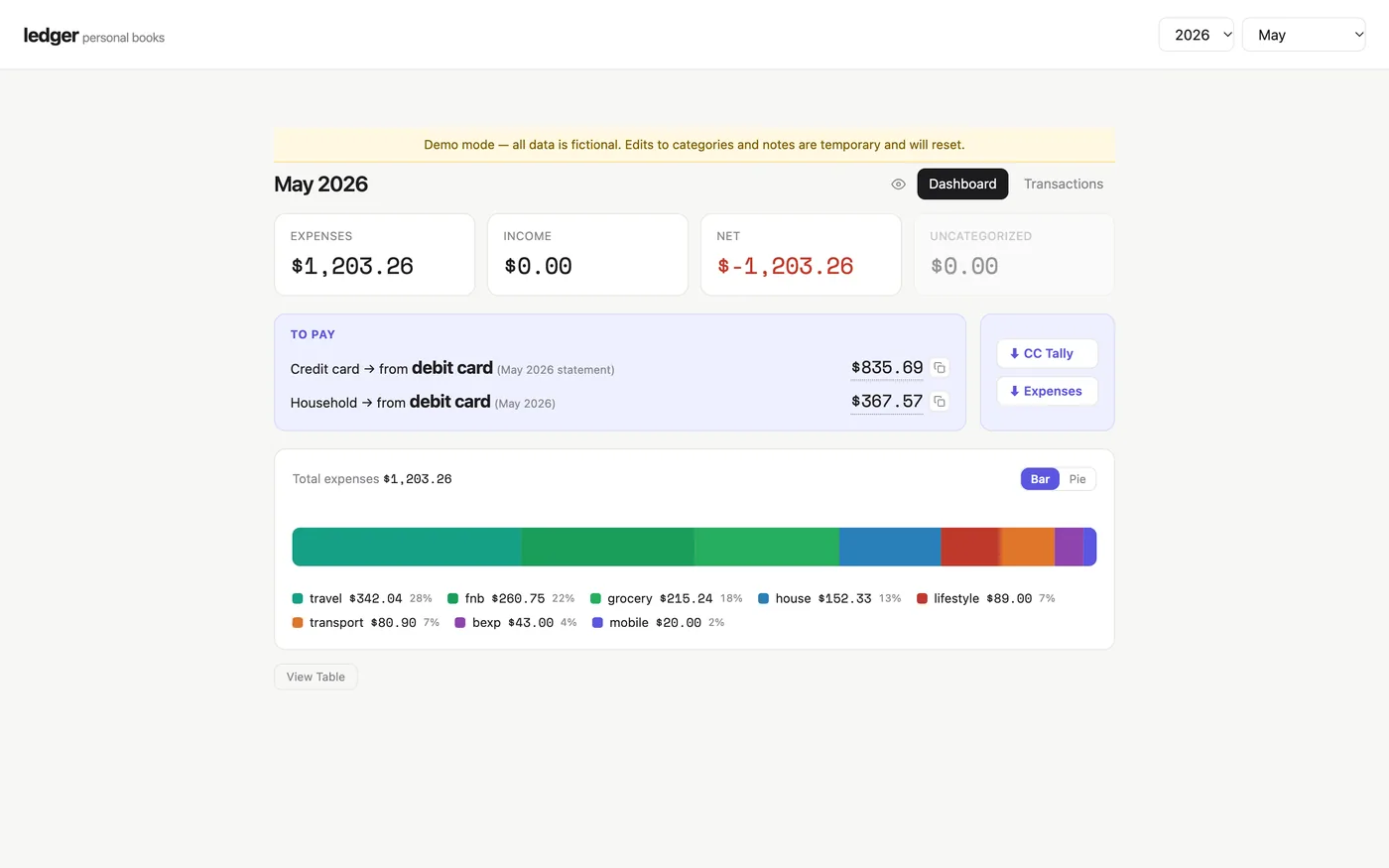
A personal bookkeeping app that replaces spreadsheets. Imports bank statements, parses them into a SQLite ledger, and produces categorised reports. Locally it's a Python server against real data; the live site serves fictional demo data.
Move
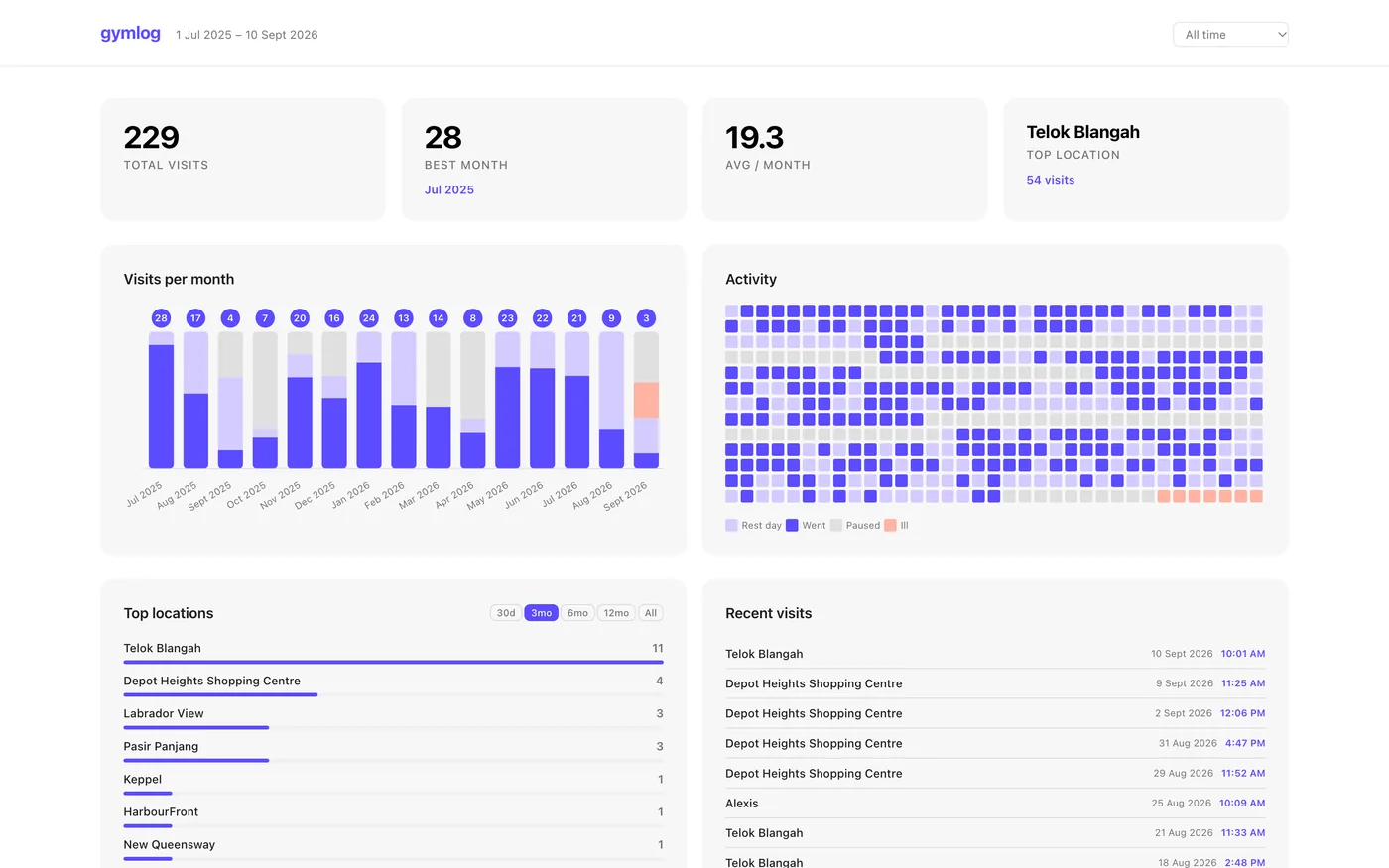
A personal activity analytics dashboard built on my gym visit data. This parses and visualises the data: monthly trends, time-of-day heatmaps, membership pauses.
Trex
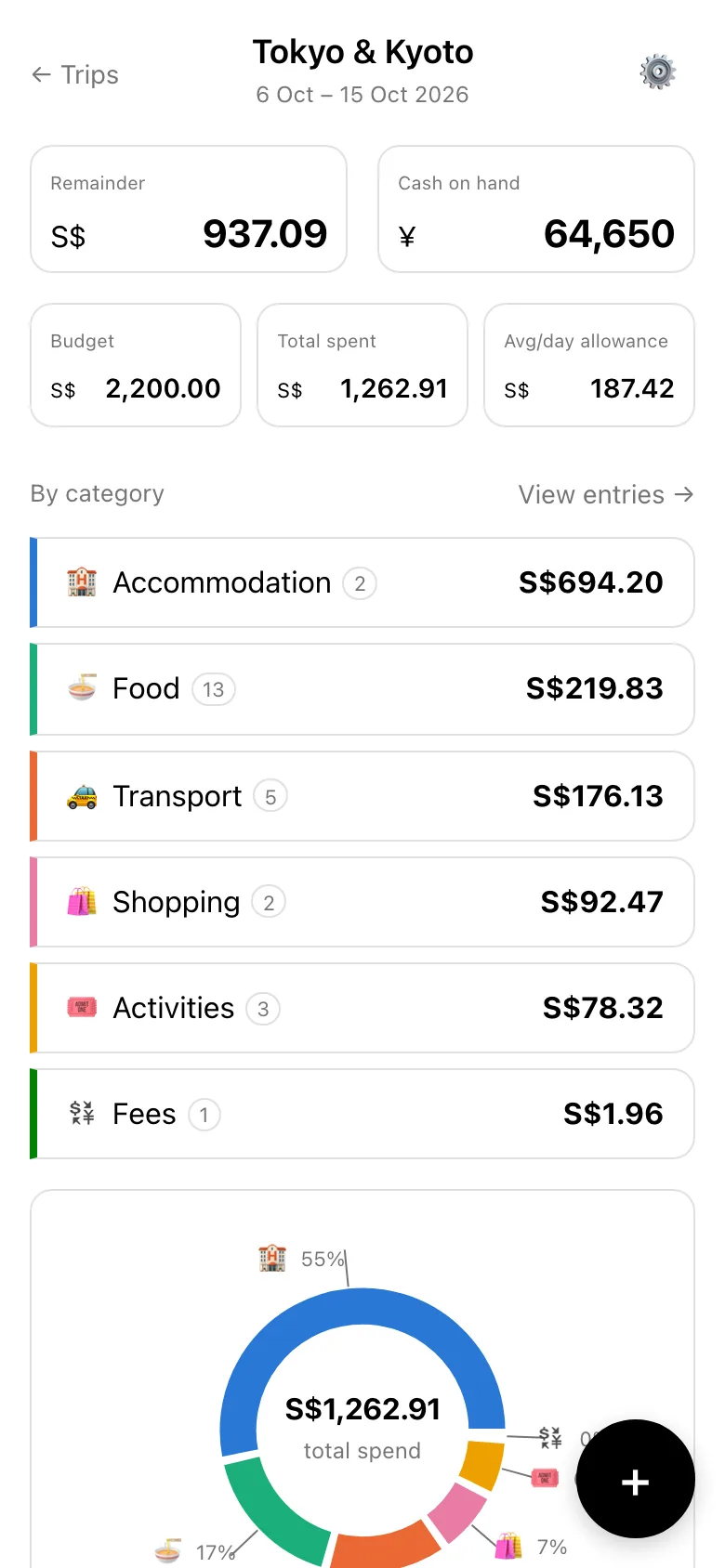
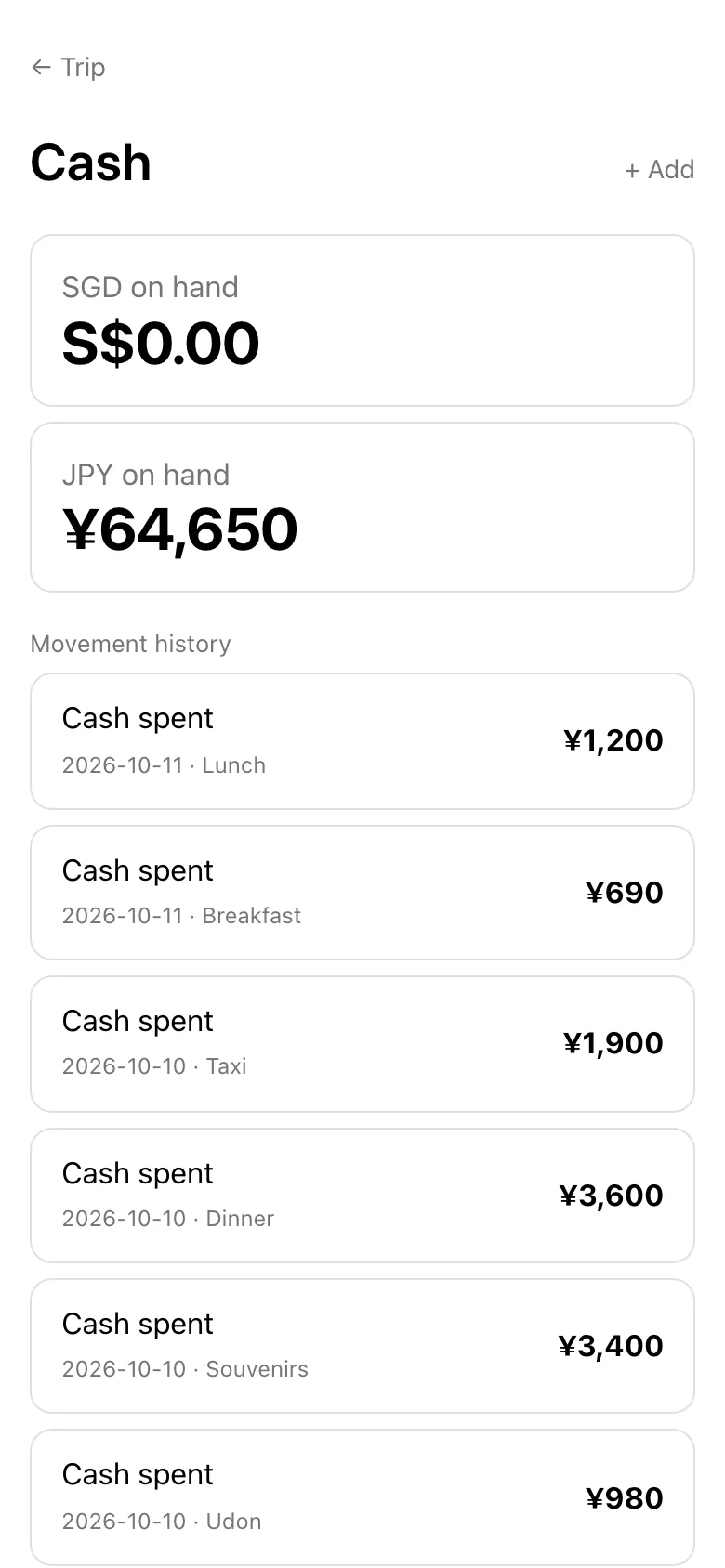
A phone-first travel spending tracker that works offline. It answers “how much can I spend per day for the rest of the trip?” and treats the cash in my pocket as a number I can reconcile against the notes in my wallet. Cash and card, multiple currencies.
WODGEN
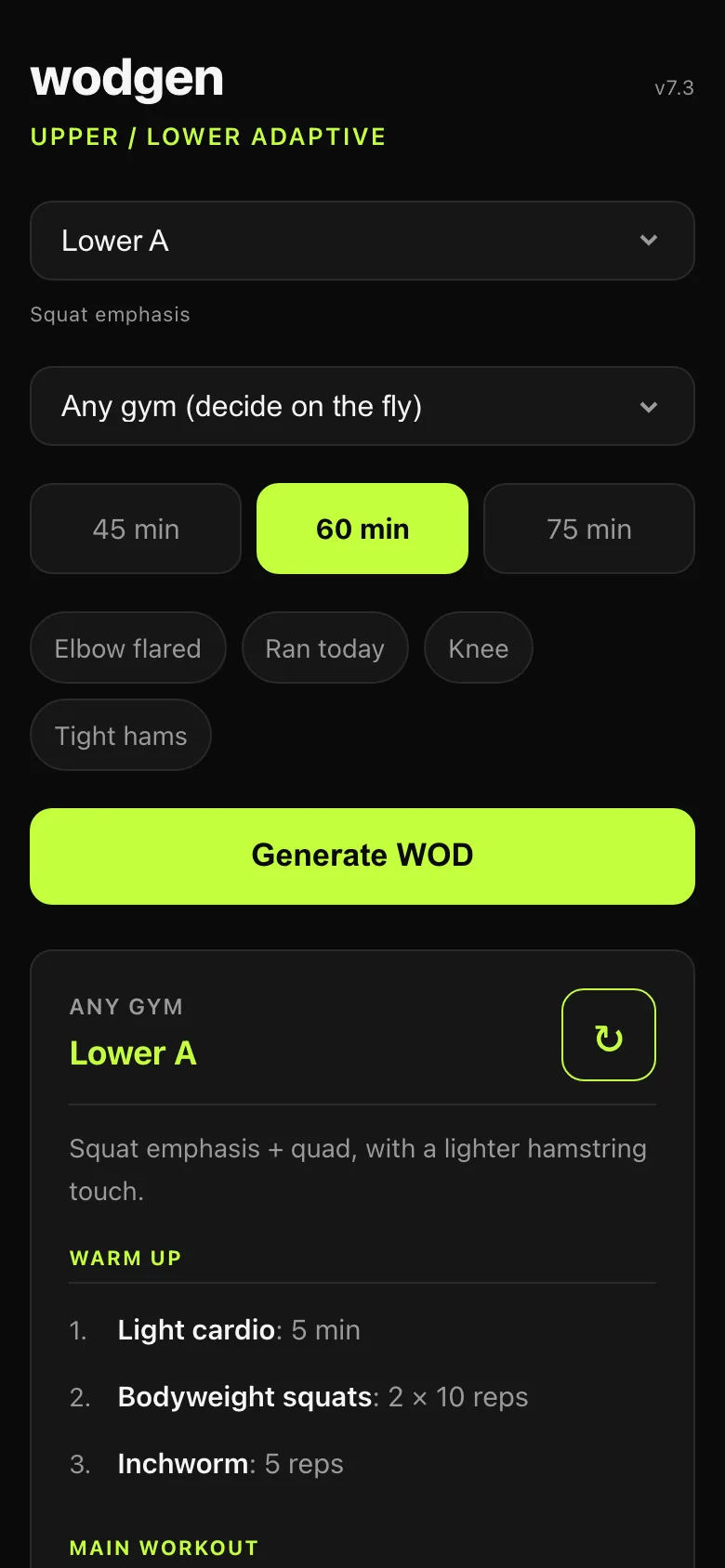
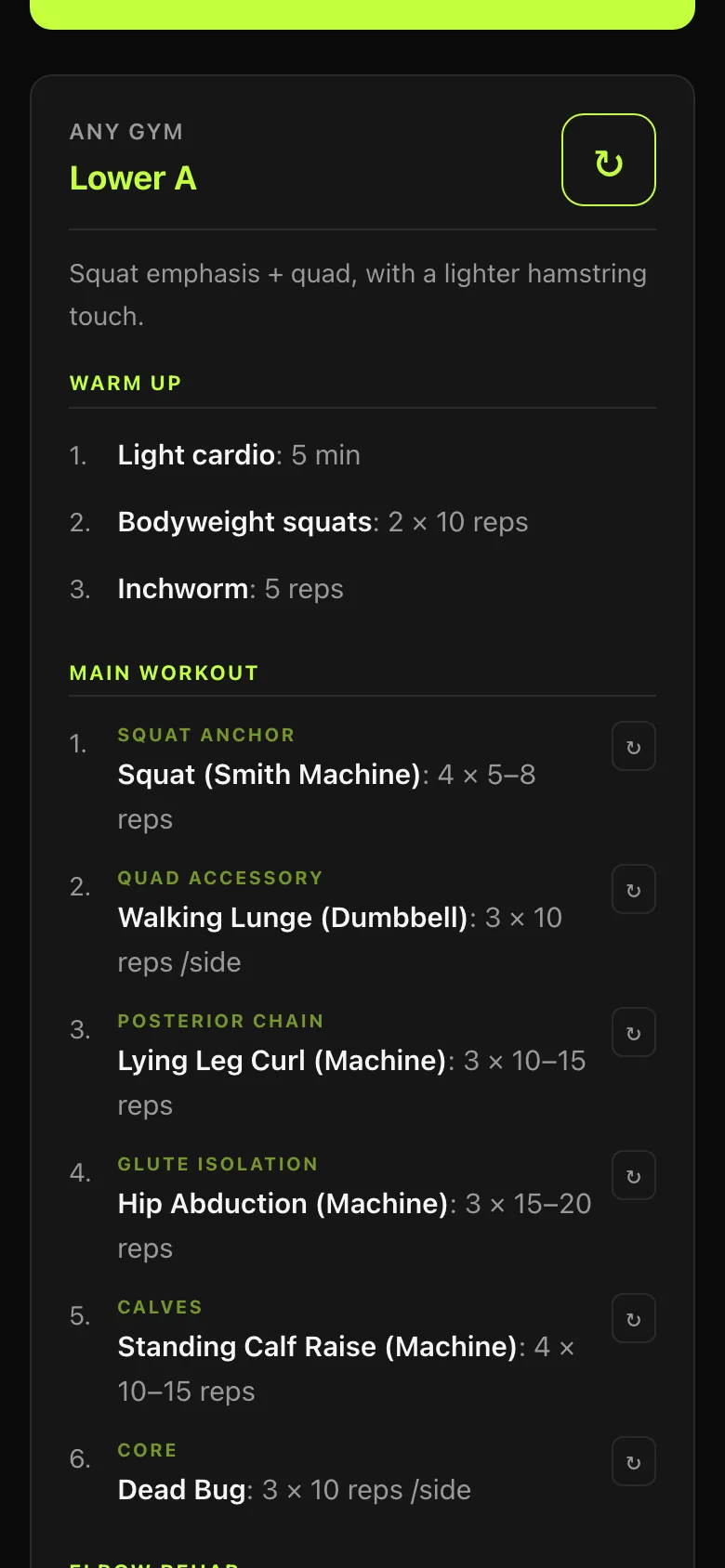
A deterministic workout generator built for one athlete: me. Workout apps optimise for everyone, which means they work for no one in particular. This one encodes a specific rotation, equipment access, and fatigue logic. Fully client-side, no API.